
Tumor biology and incidence
Melorheostosis is a rare, noninheritable, progressive bone dysplasia characterized by irregular cortical hyperostosis that follows the long axis of a bone. The disease usually affects multiple bones in the same extremity, possibly due to somatic mosaicism. Ossification may occur in skin and soft tissures overlying the affected bones. The overlying skin is often tight and shiny, and joint contractures result from soft tissue fibrosis. The genetic defect in the majority of sporadic and isolated melorheostosis remains unknown. A neuropathic etiology has been hypothesized due to the dermatomal pattern of hyperostosis.(McCarthy & Frassica. Pathology of Bone and Joint Disorders. Philadelphia: W.B. Saunders company, 1998.) The underlying cause may be due to altered expression of several adhesion proteins, including betaIG-H3.
Age
Typically presents as a painless contracture before age 6
Gender
Presentation
Flexion contracures are common. Flexion contracture of knee is most common, followed by the ankle, hip, and fingers. Pain typically develops in late adolescence and may be the only complaint. May also present as a leg length discrepance due to premature closure of physis or deformity of the limb, hand or foot. Skin overlying affected area may be tight and shiny.
Physical findings
See presentation
Plain films
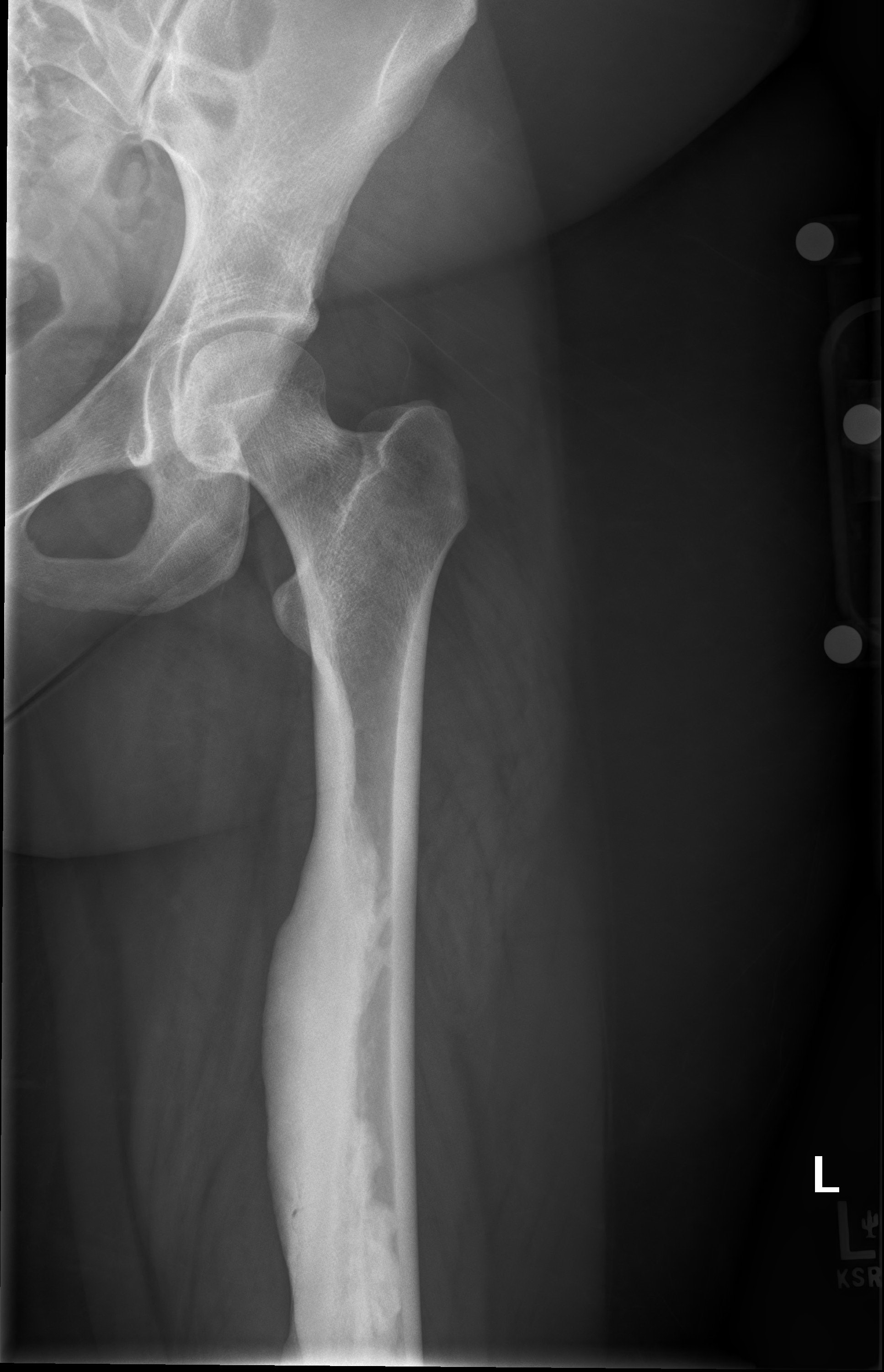
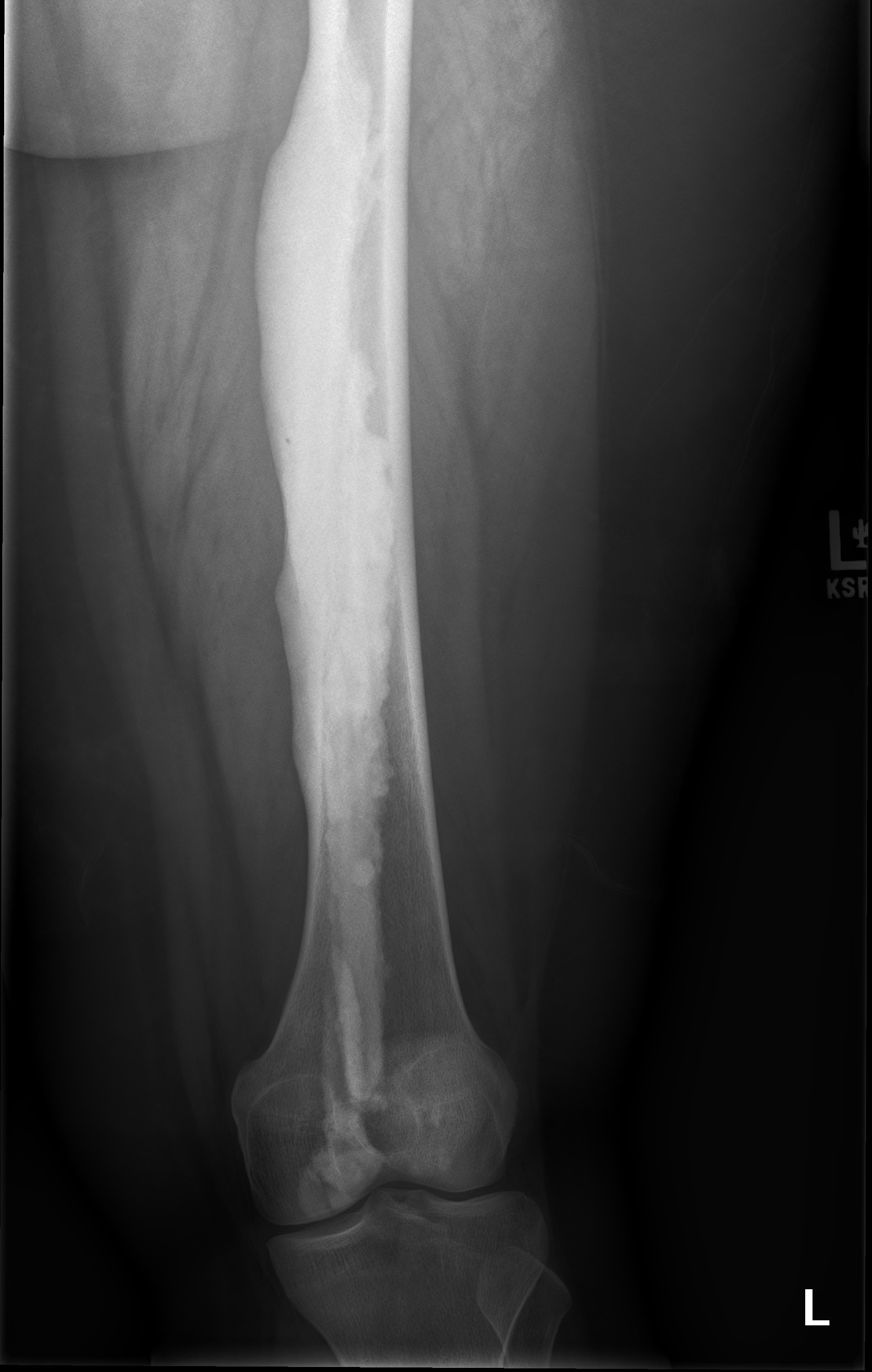
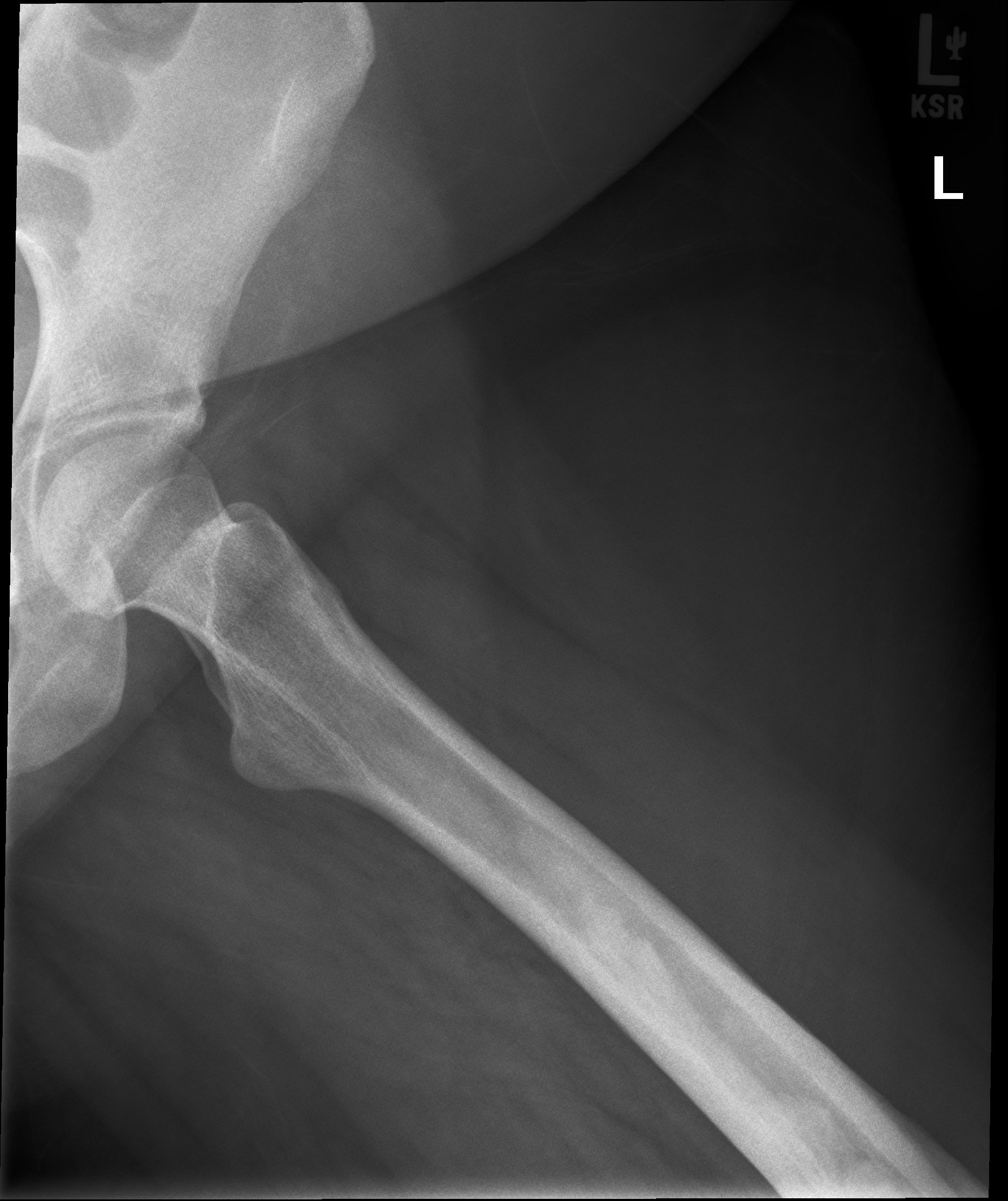
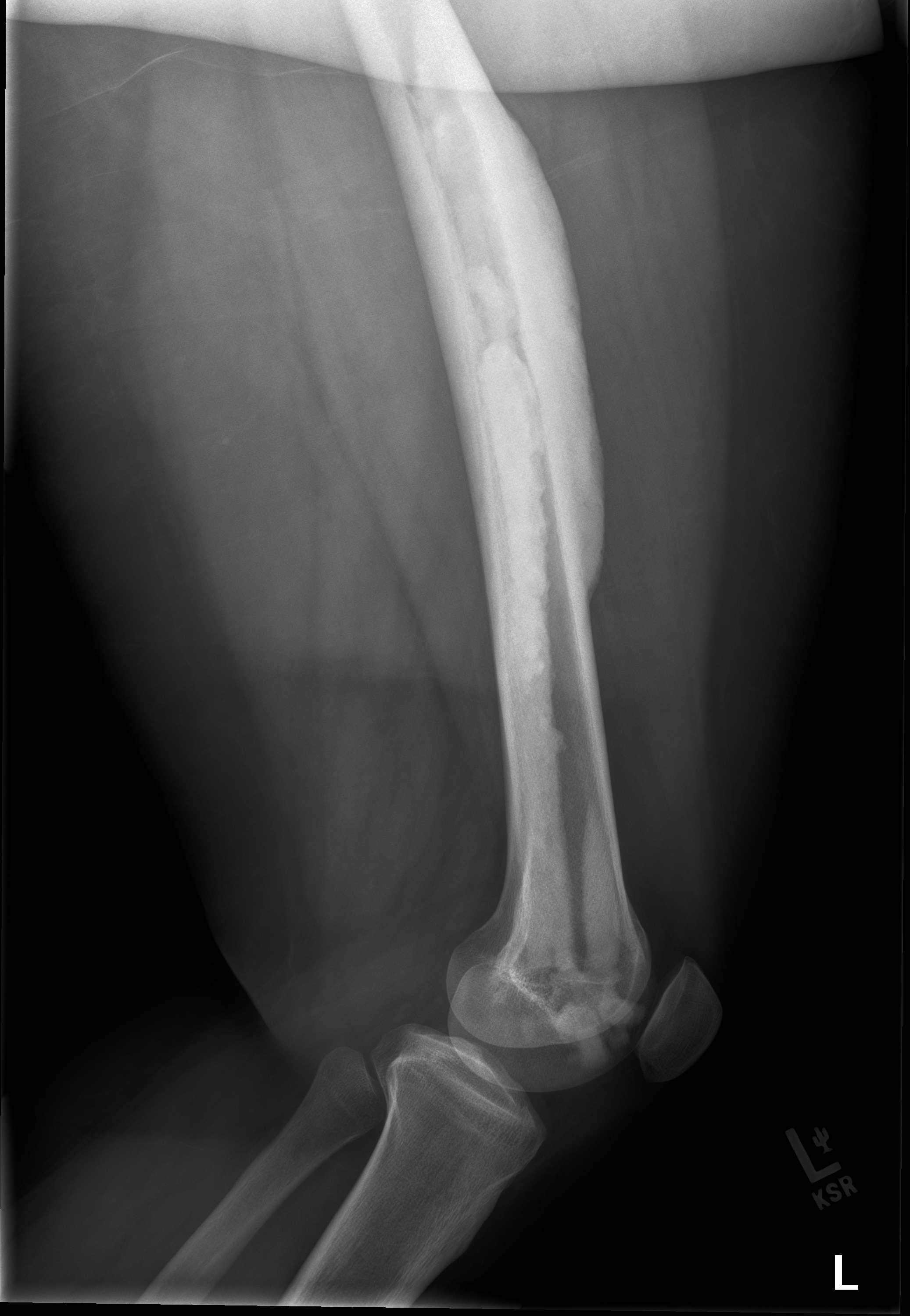
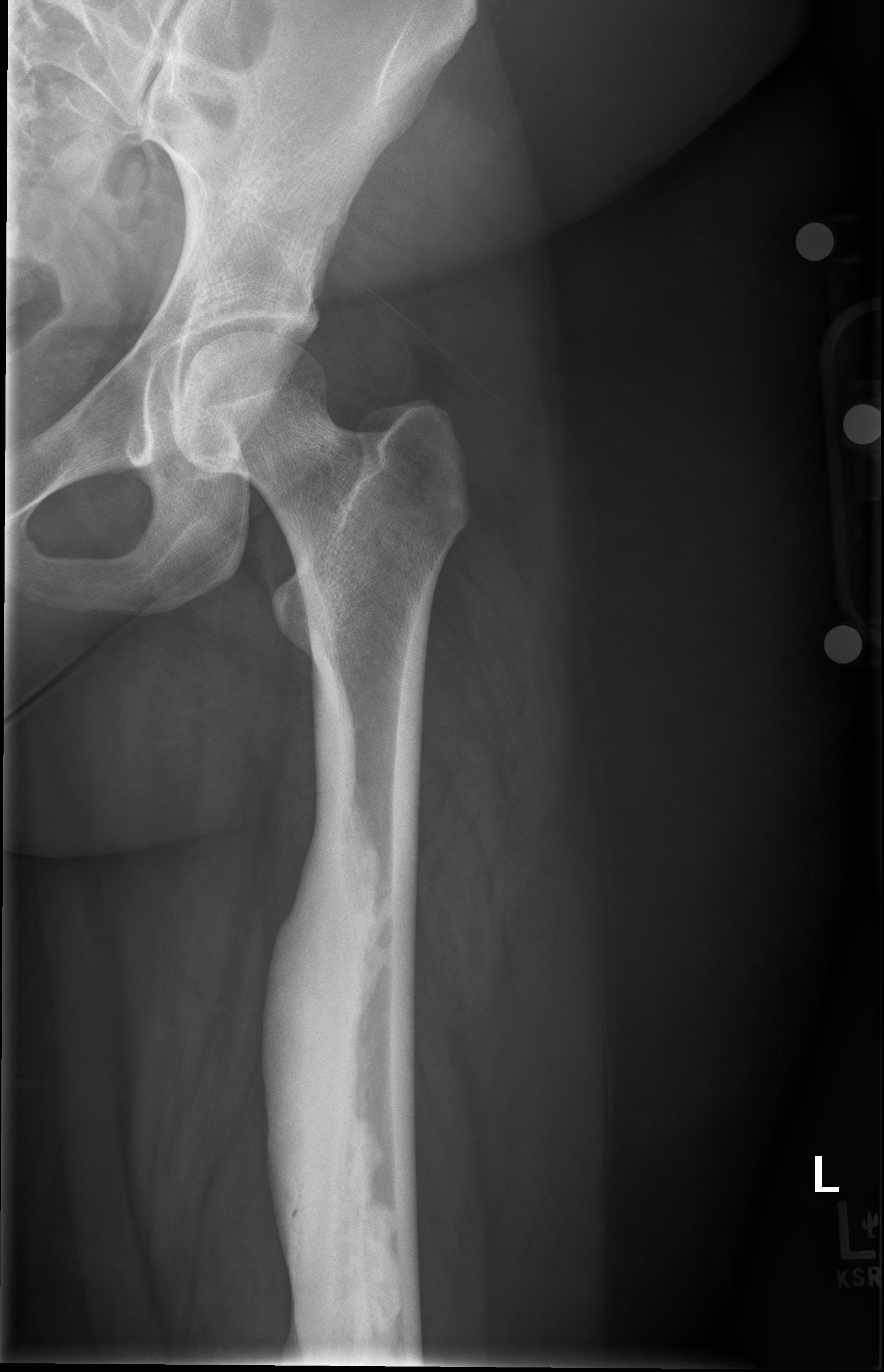
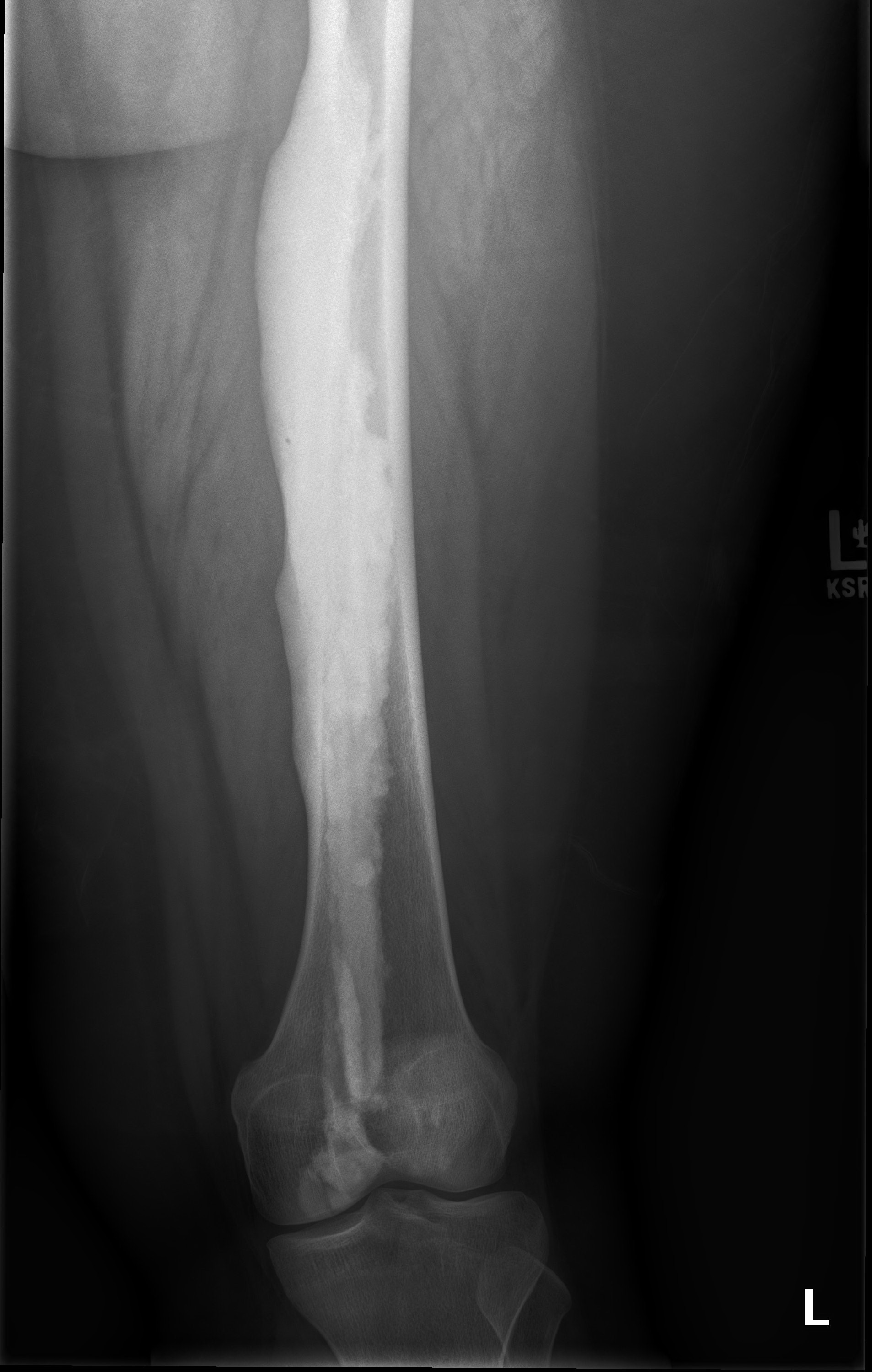
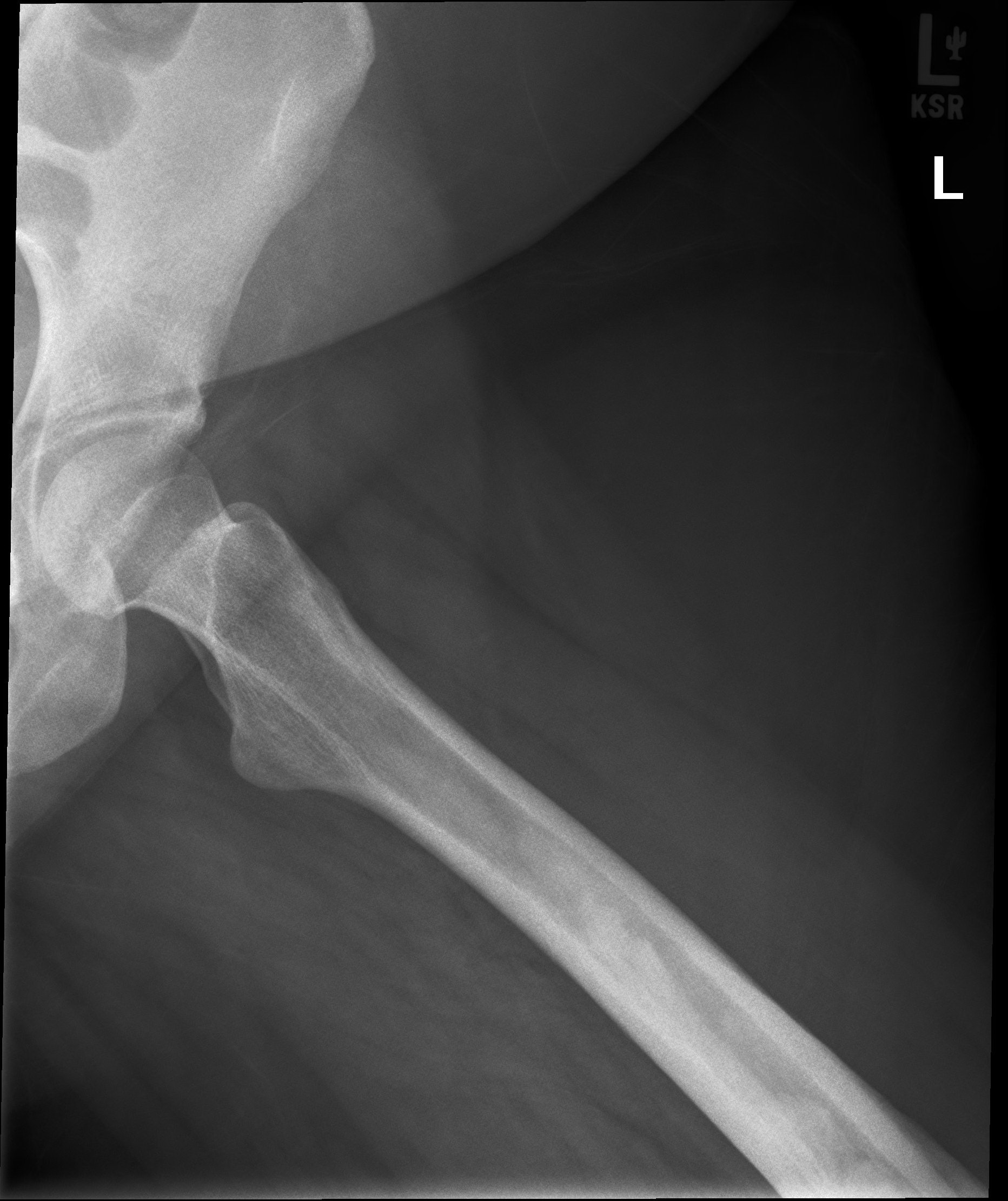
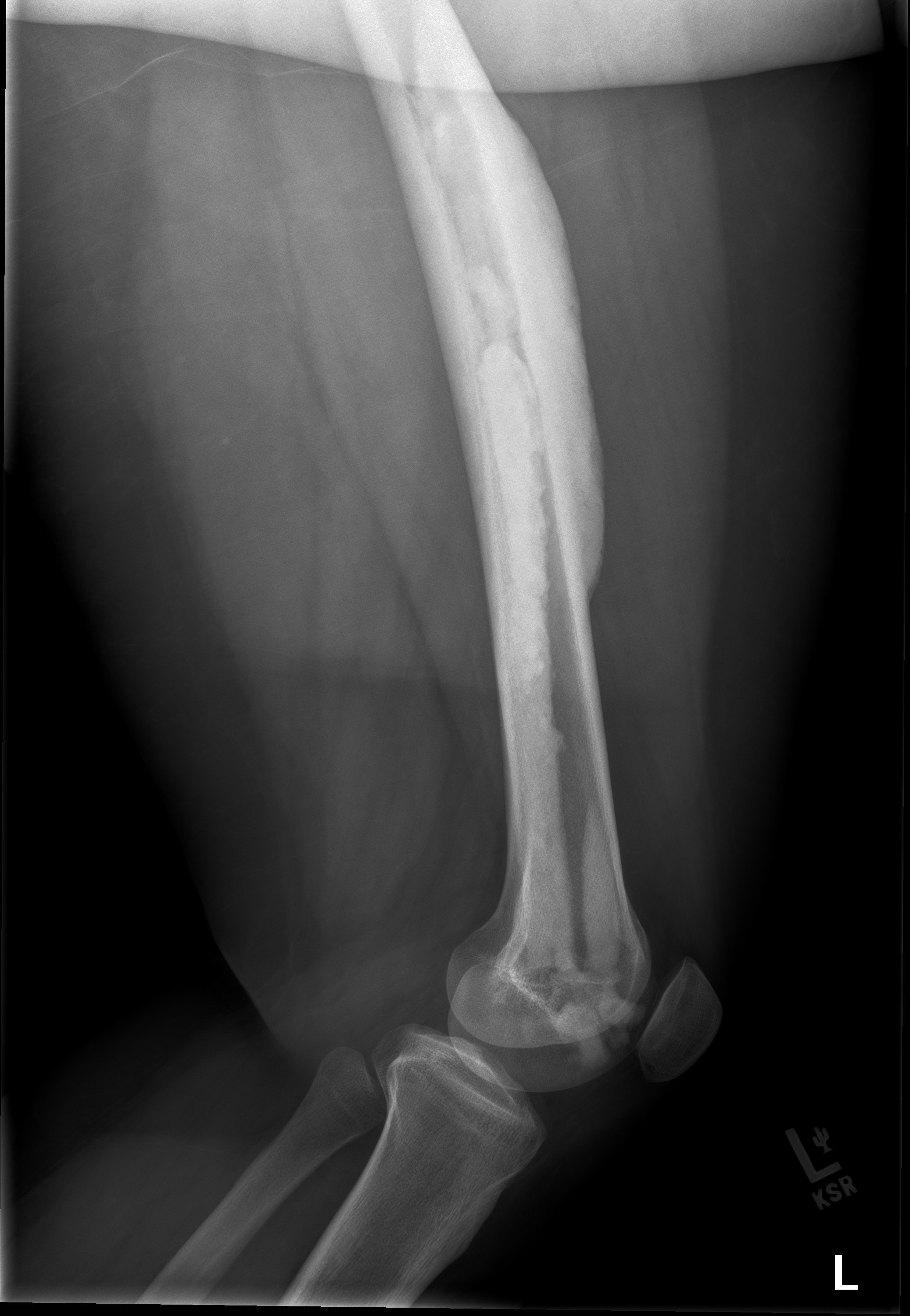
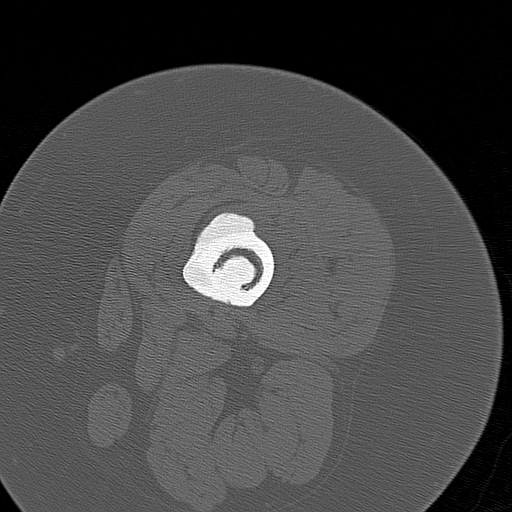
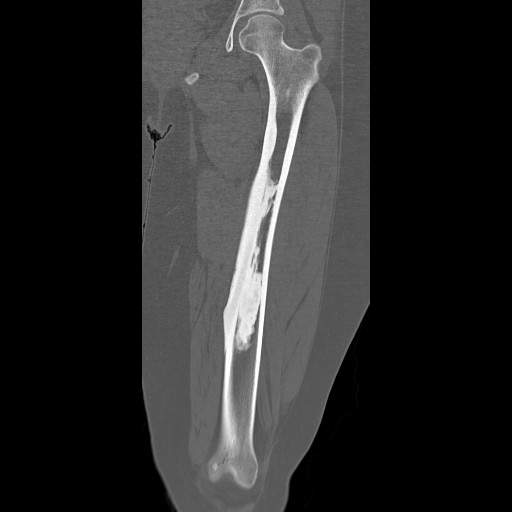
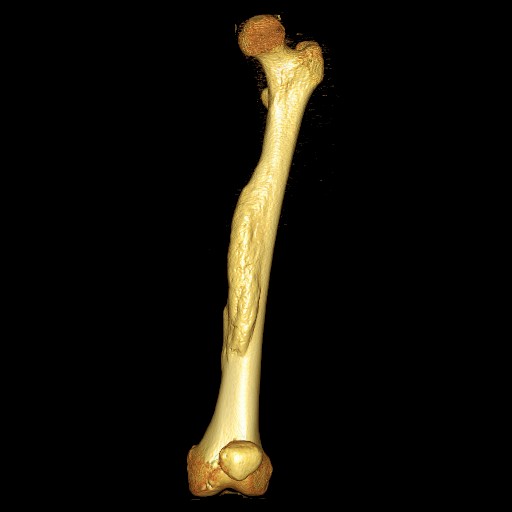
Dense cortical hyperostosis appearing as “dripping candle wax”.

Site
Rarely affects axial skeleton.
Size
Enter text
Tumor effect on bone
Bone response to tumor
Enter text
Matrix
Enter text
Cortex
Enter text
Soft tissue mass
Enter text
Bone scan
Enter text
CT Scan
MRI
Enter text
Differential Diagnosis
Enter text
Natural history
Enter text
Pathology
Corical hyperostosis is the product of new periosteal bone deposition. This bone eventurally matures into lamellar bone. Endosteal hyperostosis may also be seen. Diseases associated with melorheostosis include osteopoikilosis, osteopathia striata, scleroderma and Buschke-Ollendorff syndrome.
Diagnosis
“Dripping canle wax” pattern of cortical hyperostosis on plain x-rays is diagnostic.
Treatment
Treatment is supportive. NSAIDS may be used for analgesia. Surgery performed for the sole purpose of pain relief is rarely effective, unless the pain is secondary to nerve impingement. Surgical realease of flexion contractures is more successful in skeletally mature patients as they are not as affected by the formation of aggressive scar tissue. Surgery is effecective, however, for the treatment of boney impingement secondary to bone overgrowth.
Complications
Soft tissue releases alone in skeletally immature patients have a 100% failure rate in the literature. This does not mean that they should not be done, however families should be counseled that these procedures may need to be repeated.
Recommended Reading
Melorhesostosis Association – http://www.melorheostosis.com/
References
McCarthy & Frassica. Pathology of Bone and Joint Disorders. Philadelphia: W.B. Saunders company, 1998.
Attachments:

69637759 melorheostosis AP 1.jpg (image/x-citrix-pjpeg)
69637759 melorheostosis AP 2.jpg (image/x-citrix-pjpeg)
69637759 melorheostosis Lat 1.jpg (image/x-citrix-pjpeg)
69637759 melorheostosis Lat 2.jpg (image/x-citrix-pjpeg)
69637759 melorheostosis AP 1.jpg (image/x-citrix-pjpeg)
69637759 melorheostosis AP 2.jpg (image/x-citrix-pjpeg)
69637759 melorheostosis Lat 1.jpg (image/x-citrix-pjpeg)
69637759 melorheostosis Lat 2.jpg (image/x-citrix-pjpeg)
69637759 melorheostosis_axial_1.jpg (image/jpeg)
69637759 melorheostosis_coronal_1.jpg (image/jpeg)
69637759 melorheostosis 3D recon 1.jpg (image/jpeg)
Last Updated on June 27, 2024
🔗 Knowledge Graph & Clinical Correlates
OrthopaedicsOne Living Semantic Network🛠️ Operative Techniques
- Upper Tibial Osteotomy Musculoskeletal Medicine
🩺 Clinical Conditions & Indications
- Wigns There are three categories of diagnostic data collected during the physical examination (sign, symptom, and that in between)...
- Why have a privacy policy for my office Original Clinical Contribution: Authored for the OrthopaedicsOne General Orthopaedics Specialty Section. Preserved, digitized, and updated to modern evidence-based...
- Where is the lesion Original Clinical Contribution: Authored for the OrthopaedicsOne Musculoskeletal Oncology Specialty Section. Preserved, digitized, and updated to modern evidence-based...
- What Can OrthopaedicsOne Do for You OrthopaedicsOne Platform & Editorial Leadership Directory: Preserved, digitized, and structured to modern semantic standards. Self-Publishing • Content Aggregation •...
🔬 Anatomy, Pathology & Diagnostics
- When Policy Meets Physiology – The Challenge of Reducing Resident Work Hours General Musculoskeletal
- What We Don’t Know We Are Teaching – Unveiling the Hidden Curriculum General Musculoskeletal
- What kind of matrix is being made Generalized Bone and Joint
- Vector Systems for Gene Transfer to Joints General Musculoskeletal