
Subspecialty Theme Collection – July
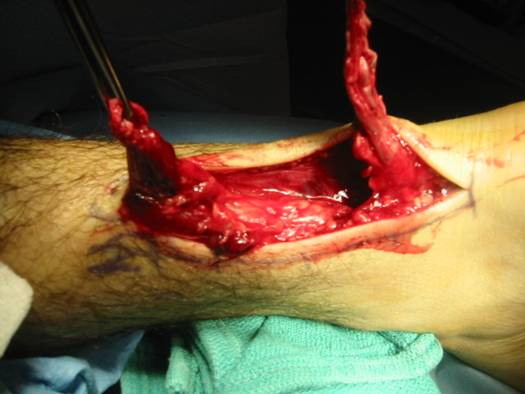 Tendons serve as attachments of muscles to bones. Overuse activity of a tendon may cause disease resulting in pain, disability, or catastrophic rupture. The most common forms of tendon disease have been termed “tendonitis,” which implies an inflammatory process, while others use the term “tendinosis,” with “osis” denoting a degenerative process1,2 of the tendon with no evidence of an inflammatory infiltrate.3,4
Regardless of the biology, there appears to be a range and possibly a continuum of clinical presentation that includes acute intermittent episodes of inflammation, chronic pain, and dysfunction. Unfortunately, catastrophe also occurs when forces applied to the tendon exceed the tensile limits that are likely related to preexisting pathologic changes that may cause weakness. The articles in this Subspecialty Theme Collection will begin with an overview of the biology of tendinopathy and then focus on the evidence-based medicine for the treatment of tendinopathy and related ruptures, addressing those most commonly affected: rotator cuff, Achilles tendon, and patellar tendon.
The practice of evidence-based medicine (EBM) is the conscientious use of current best evidence from clinical care research in making health care decisions. EBM begins and ends with patients. The clinician gathers information from the patient and then acquires pertinent information from the current available literature. This literature is then appraised and applied back to the patient in the form of a clinical care recommended treatment plan.
It is important to understand that any description of EBM requires an understanding of the hierarchy of evidence (Table 1), which often includes bias. The lowest form of evidence is a single author’s opinion (Level V), which is more prone to bias. The highest form of evidence is a scientifically sound randomized controlled trial (RCT, Level I) that is far less prone to bias.
The hierarchy of evidence and its application to the practice of orthopaedic surgery was described by Wright and is outlined in his contribution to this feature. An understanding of this hierarchy of evidence allows an assignment of the level of evidence (LOE) for individual research studies. However it is important to understand that one study does not necessarily provide sufficient evidence to make a recommended treatment plan. A recommended treatment plan is best made after all studies are considered.
This process was recently described by Wright, where emphasis was placed on a recommendation that was made after considering all evidence available. This process included summarizing Levels of Evidence ratings for multiple studies to arrive at a clinical care recommendation (Table 2)
Thus, modern EBM may be summarized as a process that rates the quality of individual studies and then summarizes these ratings to provide a confidence level for a Graded treatment recommendation.
Mark Glazebrook MSc, PhD, MD, FRCS(C), Dip Sports Med
Associate Professor Dalhousie University Orthopaedics
Halifax, Nova Scotia, Canada
Reprinted with permission from the Fall 2010 issue of COA Bulletin
 | Articles in the Evidence Based Medicine – Tendinopathy series will be available according to the schedule below. |
Date Released | Topic |
|---|---|
July 16, 2012 | |
July 23, 2012 | |
July 23, 2012 | |
July 23, 2012 | |
July 30, 2012 | |
July 30, 2012 |
Attachments:

Last Updated on June 27, 2024
🔗 Knowledge Graph & Clinical Correlates
OrthopaedicsOne Living Semantic Network🛠️ Operative Techniques
- Unicondylar Knee Arthroplasty Joint Reconstruction
- Unicompartmental Knee Arthroplasty – An Option for Treating Unicompartmental Osteoarthritis Joint Reconstruction
- Total Knee Arthroplasty: Surgical Technique Joint Reconstruction
- Total Knee Arthroplasty Using a Hybrid Navigation Technique Joint Reconstruction
🩺 Clinical Conditions & Indications
- Valgus-Unloader Bracing in Knee Osteoarthritis Original Clinical Contribution: Authored for the OrthopaedicsOne Adult Reconstruction Specialty Section. Preserved, digitized, and updated to modern evidence-based...
- Valgus deformity of the knee Valgus deformity is a term for outward angulation of the distal segment of a bone or joint. The...
- Total Knee Arthroplasy Protocol (Shawn Maloney) Total Knee Arthroplasy Protocol Weeks 1-2 Goals Diminish pain and swelling Increase range of motion Gait training and...
🔬 Anatomy, Pathology & Diagnostics
- What Is the Evidence-Based Data for Gender Specific Arthroplasty in TKA Knee Joint & Extensor Mechanism
- Warfarin – What Is Our Goal Knee Joint & Extensor Mechanism
- Virtual Reality in Orthopaedics – Is It a Reality Knee Joint & Extensor Mechanism
- Venous Thromboembolism – Case Presentations and Discussion Knee Joint & Extensor Mechanism
💼 Practice Management & Professional Operations
- What Is the Evidence-Based Data for Mobile Bearing Knees Mobile and Wireless